
Introduction to the 80/20 Rule
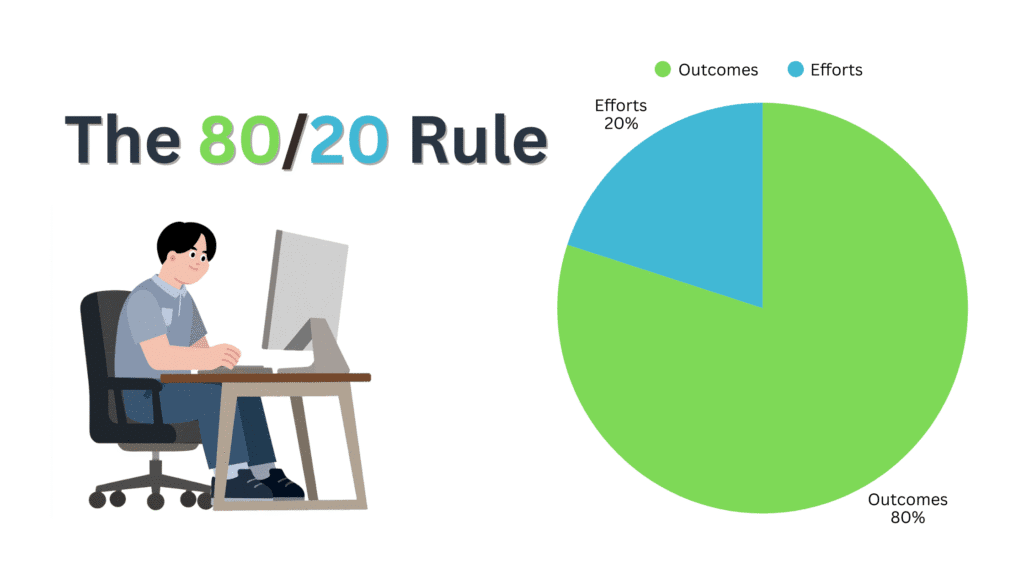
The 80/20 Rule, also known as the Pareto Principle, is a simple yet powerful concept: 80% of results come from 20% of efforts. In a world obsessed with doing more, faster, and harder, the 80/20 Rule offers a refreshing alternative—do less, but do it smarter.
This principle applies across industries, professions, and even personal life. Whether you’re managing a business, planning your day, or working toward long-term goals, the 80/20 Rule helps you identify what truly drives results. Instead of spreading your energy thin, you focus on the few actions that create the biggest impact.
What makes the 80/20 Rule especially relevant today is information overload. We’re constantly busy, yet often unproductive. The rule acts as a filter, separating meaningful work from noise. And yes, it’s not just theory—it’s backed by decades of observation and real-world results.
Origin of the Pareto Principle
The 80/20 Rule was discovered by Italian economist Vilfredo Pareto in the late 19th century. He noticed that 80% of land in Italy was owned by 20% of the population. Later, similar patterns appeared in business, economics, and nature.
Over time, researchers realized this imbalance wasn’t random—it was universal. From wealth distribution to software bugs, the same pattern repeated. Today, the 80/20 Rule is used globally as a decision-making framework.
Why the 80/20 Rule Matters Today
Modern life rewards focus. The 80/20 Rule matters because it aligns effort with outcome. Instead of glorifying hustle, it promotes effectiveness. In short, it helps you work smarter—not longer.
How the 80/20 Rule Works in Real Life
The beauty of the 80/20 Rule lies in its flexibility. It doesn’t demand perfection. Instead, it encourages awareness. When you understand where your best results come from, you naturally begin to prioritize better.
For example:
- 80% of sales often come from 20% of customers
- 80% of stress comes from 20% of problems
- 80% of progress comes from 20% of habits
These patterns reveal hidden leverage points in your life and work.
The Science Behind Unequal Results
Human systems are not balanced by design. Small causes often lead to large effects. Psychologists call this “asymmetric payoff.” The 80/20 Rule simply gives this reality a practical structure.
Once you see it, you can’t unsee it.
Common Misconceptions About the 80/20 Rule
Many people assume the 80/20 Rule is rigid. It’s not.
80/20 Is a Guideline, Not a Formula
The numbers don’t have to be exact. Sometimes it’s 70/30 or 90/10. What matters is identifying the vital few versus the trivial many. The principle guides thinking, not math.
Applying the 80/20 Rule to Productivity and Work
This is where the 80/20 Rule truly shines. Most professionals spend their days reacting—emails, meetings, notifications. Yet only a small portion of that work actually moves the needle.
The key is identifying high-impact tasks.
Identifying High-Impact Tasks
Ask yourself:
- Which tasks generate the most results?
- Which activities align with long-term goals?
- What would happen if I stopped doing low-value work?
Often, 20% of tasks create 80% of outcomes. These might include strategy, relationship-building, or creative thinking.
Eliminating Low-Value Activities
Once high-impact tasks are clear, the next step is elimination. This doesn’t mean being lazy. It means being intentional.
Low-value activities often include:
- Excessive meetings
- Repetitive manual tasks
- Unnecessary approvals
Automation and delegation support the 80/20 Rule perfectly.
The Role of Focus and Priority
Focus is a force multiplier. When you align focus with the 80/20 Rule, productivity skyrockets. You’re no longer busy—you’re effective.
Using the 80/20 Rule in Business and Marketing
Businesses thrive or fail based on how well they allocate resources. The 80/20 Rule offers clarity in chaos.
Revenue, Customers, and the 80/20 Rule
In most businesses:
- 20% of customers generate 80% of revenue
- 20% of products create 80% of profits
Smart companies double down on their best customers and best offers instead of chasing everyone.
Marketing Campaign Optimization
In digital marketing, the 80/20 Rule is gold. A few channels, ads, or keywords often drive most conversions. By analyzing performance data, marketers can cut waste and scale what works.
A deeper explanation of the Pareto Principle can be found on Wikipedia’s Pareto Principle page, which provides historical and modern examples.
The 80/20 Rule in Personal Life
The 80/20 Rule isn’t just for work—it transforms personal life too.
Health, Relationships, and Personal Growth
Often, a few habits create most health benefits:
- Regular sleep
- Balanced diet
- Consistent movement
Similarly, a few relationships bring most happiness. The 80/20 Rule encourages nurturing what matters most.
Time Management Simplified
Instead of filling every hour, the 80/20 Rule helps you protect time for what truly counts. More white space. Less guilt. Better results.
Benefits and Limitations of the 80/20 Rule
Key Advantages
- Improved clarity
- Reduced burnout
- Better decision-making
- Higher efficiency
By focusing on the essential few, stress decreases and confidence grows.
Potential Drawbacks
The 80/20 Rule can be misused if taken too literally. Some foundational tasks may not show immediate payoff but are still necessary. Balance is key.
FAQs About the 80/20 Rule
1. What is the 80/20 Rule in simple terms?
The 80/20 Rule means most results come from a small portion of effort.
2. Is the 80/20 Rule scientifically proven?
It’s an observed principle, not a law, but it’s widely validated across industries.
3. Can the 80/20 Rule apply to students?
Yes. Focusing on key topics often delivers better academic results.
4. Does the 80/20 Rule work for time management?
Absolutely. Prioritizing high-impact tasks saves time and energy.
5. Is the 80/20 Rule always exactly 80 and 20?
No. The ratio varies. The concept of imbalance matters more than numbers.
6. How do I start using the 80/20 Rule today?
List your activities, identify top results, and focus more on what works.
Yo, 556betcom! A quick check and I’m already intrigued. How does every thing look at first glance? Take a peek with this link: 556betcom.