
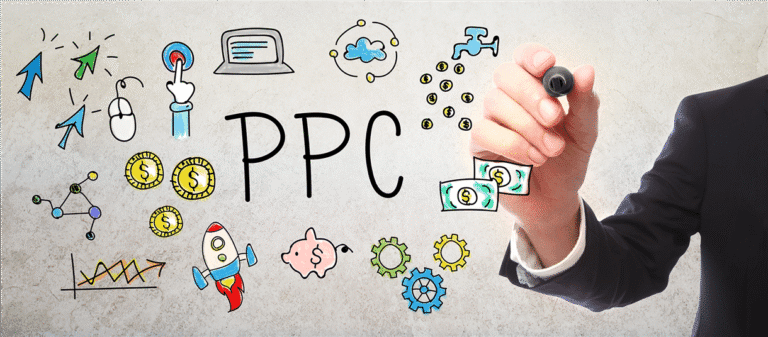
UNDERSTANDING PPC: HOW PAY PER CLICK ADVERTISING REALLY WORKS
In the competitive world of digital marketing, businesses are constantly seeking effective ways to reach their target audience while maximising return on investment. One of the most popular and highly effective strategies is PPC advertising, also known as Pay Per Click. Whether you’re a small business owner, a marketing professional, or simply curious about how online ads work, understanding PPC can help you make smarter decisions and boost your brand’s online presence.
In this blog, we’ll explore what PPC is, how it works, why it matters, and how you can build campaigns that deliver real results.
WHAT IS PPC ADVERTISING?
Pay Per Click (PPC) advertising is a digital marketing model where advertisers pay a fee only when someone clicks on their ad. Rather than earning organic traffic over time through content and SEO, PPC allows businesses to buy visits to their website or landing pages.
In simple terms:
- You create an ad
- Someone sees it
- They click it
- You pay for that click
Common platforms that offer PPC advertising includes Google Ads, Microsoft Advertising (formerly Bing Ads), Facebook Ads, Instagram Ads, LinkedIn Ads, and more.
WHY PPC IS SO VALUABLE
PPC has become a cornerstone of digital advertising for several key reasons:
1. Instant Visibility
Unlike SEO, which can take months to generate organic traffic, PPC delivers immediate exposure. Once your campaign goes live, your ads can appear on search engines and social platforms straight away.
2. Highly Targeted Reach
With PPC, you decide who sees your ads based on factors like:
- Keywords
- Location
- Demographics
- Interest
- Device type this level of targeting ensures the right audience sees the right message at the right time.
3. Measurable ROI
Every aspect of PPC can be measured. From clicks and impressions to conversions and cost per acquisition CPA, there’s no guessing in PPC. Analytics help you understand performance and improve strategy.
4. Budget Control
You set your budget- daily, weekly, or monthly and you never pay more than that limit. This makes PPC accessible for businesses of all sizes.
HOW PPC ADVERTISING REALLY WORKS
To truly understand PPC, let’s break it down into key components that define how campaigns function.
1. Keywords: The Backbone of PPC
Keywords are the words or phrases people type into search engine when looking for information, products, or services. In PPC, advertisers bid on these keywords hoping to show up when someone searches for them.
Example:
A local bakery might bid on keywords like:
- “Best Birthday Cakes”
- “Custom Cupcakes Near Me”
- “Wedding Cake Pricing”
When a user searches for these keywords, the platform decides which ads to show based on bids, relevance, and other factors.
2. AD Auction: What Determines Who Wins
Whenever user enters a search query, search engine run an ad auction to determine which ad appear and in what order. Unlike a traditional auction where highest bidder always wins, PPC is more strategic. Platforms like Google Ads evaluate:
- Bid Amount:
How much you’re willing to pay per click
- Quality Score:
How relevant your ad and landing page are to user’s search
- AD Rank:
A combination of bid and quality score that determines placement
This means a lower bid can still win a top position if the ad quality is strong- a big reason why well- written, relevant ads are often outperform expensive but poorly structured campaigns.
3. Ad Creation: Capturing Attention
A PPC ad typically has several elements:
- Headline: Grabs attention
- Descriptions: Communicates Value
- Display URL: Shows the landing page
- Call To Action: Encourage clicks (e.g. Buy Now, Learn More)
For Example, a PPC ad for an online yoga class might look like:
Headline: Join live Online Yoga Classes
Description: Beginner Friendly Session+ Flexible Timings. Start Your Free Trial Today!
CTA: Sign Up
Effective ads are clear, concise, and focused on benefits rather than features.
4. Landing Pages: Where Clicks Convert
After users click your ad, they land on a landing page. This page must be aligned with your ad message and optimized to convert visitors into leads or customers.
Key elements of high converting landing page:
- Clear Headline
- Relevant Content
- Strong Call-To-Action (CTA)
- Fast Loading Speed
- Easy Navigation
If your ad promises “Free SEO Audit”, your landing page should deliver exactly that- not a general homepage.
5. Tracking and Analytics: Measure What Matters
Data is the heart of PPC. Most platforms offer built-in analytics that show:
- Impressions ( how many times your ad was seen)
- Click through rate
- Cost per click
- Conversion rate
- Return on ad spend (ROAS)
You can track performance and optimize campaigns by adjusting bids, changing keywords, modifying ad copy, or improving landing pages
TYPES OF PPC CAMPAIGNS
PPC isn’t one size fits all. Here are some common formats:
I. Search Ads
These show up on search engine results when users search specific keywords. They’re intent based and ideal for capturing active buyers.
II. Display Ads
Visual ads that appear across the Google display Networks on websites and apps. Great for brand awareness.
III. Social Media Ads
Platforms like Facebook and Instagram let you run PPC ads targeted by interest, behaviour, and demographics.
IV. Remarketing Ads
These ads follow users who have visited your website but didn’t convert, reminding them to return and complete a purchase.
COMMON MISTAKES TO AVOID IN PPC
Whether you’re new to PPC or refining your strategy, watch out for these frequent pitfalls:
- Ignoring Keyword Research
Skipping in depth keyword research often leads to wasted spend on irrelevant terms
- Poor Landing Pages
Sending traffic to a homepage instead of a focused landing page results in low conversions
- Not Tracking Conversions
If you can’t measure results, you can’t optimize performance
- Setting and Forgetting
PPC requires ongoing analysis. Campaigns must be adjusted regularly based on performance insights.
TIPS FOR PPC SUCCESS
To get the most out of your PPC investments:
- Start With Clear Goals
Know whether you want leads, sales, sign-ups, phone calls, or website traffic
- Use Negative Keywords
Exclude irrelevant terms that waste your budget
- Test Multiple Ads
Try different headlines and descriptions to see what resonates best
- Monitor Daily
Track performance trends and adjust bids and targeting frequently
- Focus on Quality Score
Improve ad relevance and landing pages to lower CPC and boost visibility
FINAL THOUGHTS
Pay-Per-Click (PPC) advertising is a highly effective, measurable and adaptable form of advertising available to digital marketers. While it may appear overwhelming to begin with, knowing its different elements, such as keywords, bidding, ad creation, landing pages and analytics will help you reach your target customers via the internet more effectively. If managed properly, PPC can lead to not only an increase in web traffic, but also generating higher value responses to that traffic.
To be successful with PPC advertising, whether it’s through a brand new campaign or scaling existing ads, the goal should be to run small tests, gather data and adjust your strategy based on results. The more that you are able to know about your target audience, and improve your strategy, the better your PPC will perform.
Start out slow, think through your strategy and let the data help with your decision making. If you approach PPC the way described above, then it can be one of your best growth channels.
Step into the exciting world of online gaming with [url=https://www.365-cuci.com/]365cuci platform[/url] and test your luck every day!
365cuci is a modern online laundry platform focused on saving users time.
It provides customers with a convenient way to manage laundry without leaving home.
Modern planning tools guarantee timely pickup and return of clothes.
It works perfectly for those who want to save time on daily chores.
Users have full flexibility to personalize washing and care settings.
Real-time tracking keeps users informed throughout the process.
Visit https://365-cuci.com/.
[url=https://casino-fc777.com/]fc777 bet[/url] offers the best slot machines and generous bonuses for all players.
The evolution of fc777 is slated to impact multiple fields profoundly.
Play the best games and claim amazing bonuses on [url=https://evo888-download.com/]evo888 slot[/url] now!
To safeguard user data, Evo888 employs sophisticated security technology.
Discover the excitement of online gaming with [url=https://exbet-login.com/]exbet[/url], your ultimate destination for thrilling bets and big wins.
Engaging in ex bets demands analyzing various factors before placing a wager.
Discover endless fun and excitement at [url=https://gooday4play.com/]good day 4 play[/url], your ultimate destination for entertainment.
Through integrating fun experiences with useful features, the platform keeps users engaged.
Если вы ищете надежный автосервис для вашей Тойота в Москве, вам повезло. В этом автосервисе вы найдете опытных техников, которые знают все о Тойота.
Если вам нужен качественный и надежный [url=https://servis-toyota-moskva.ru/remont-toyota-v-moskve/] автосервис Тойота[/url], мы предлагаем широкий спектр услуг для вашего автомобиля.
Работа с автомобилями этой марки требует особого подхода. Все работники имеют соответствующую квалификацию и опыт.
Техническое оснащение сервиса соответствует самым высоким стандартам. Благодаря этому, мы можем гарантировать качество выполняемых работ.
Наш автосервис обеспечивает надежность и долговечность вашего автомобиля. Мы ценим каждого клиента и стремимся к его удовлетворенности.
Experience the thrill of online gaming at [url=https://site-777bet.com/]777bet[/url], where excitement and big wins await you.
777bet represents a modern betting site attracting a growing community of bettors internationally.
—
Its user-friendly interface makes it easy for both beginners and experienced bettors to navigate.
Для быстрого и эффективного избавления от неприятных соседей воспользуйтесь услугами [url=https://obrabotka-klopov.ru/]уничтожение клопов в квартире[/url], чтобы вернуть дому комфорт и спокойствие.
Важно следовать инструкциям и проводить обработку повторно, чтобы не допустить выживания насекомых.
Experience thrilling wins and endless entertainment at [url=https://777bet-registration.com/]777bet[/url], your ultimate destination for online gaming.
These incentives not only boost the bankroll but also add excitement to the betting process.
Discover the excitement and top bonuses at [url=https://66exbet.com/]Ex Bet[/url], your ultimate destination for online gaming.
ExBet features numerous promotions and bonuses that reward both newcomers and returning players.
Discover the thrill of online gaming at [url=https://777-bet.io/]777bet[/url], where exciting bets and big wins await you!
Users enjoy attractive odds which enhance their chances of success in betting.